Food lists
Low FODMAP grocery list: a printable shopping list by aisle
Updated · Written by the Done Enough team · Sources linked below

In this guide (10 parts)
Free printable: get the PDF for this guide.
A low FODMAP grocery list is a shopping list of foods that Monash University tested as low in FODMAPs, the fermentable carbohydrates that can trigger gut symptoms in some people with irritable bowel syndrome. This one is grouped by store aisle, with a tick box for each line, so you can take it to the shop.
Use the table below as a starting shortlist, read every label on packaged food, and keep the Monash FODMAP app open for serve sizes. The list is informational only and does not replace advice from a doctor or dietitian.
The list at a glance
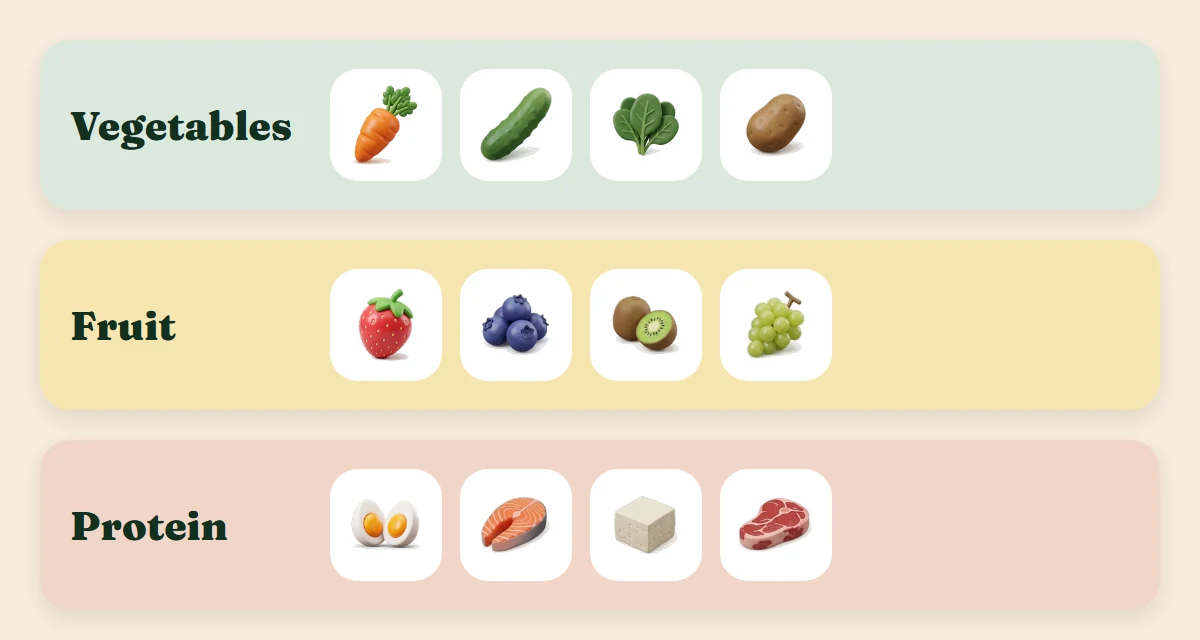
A low FODMAP grocery list by aisle covers vegetables, fruit, grains and bakery, meat and alternatives, dairy, nuts and seeds, and pantry staples, regrouped by us from the Monash shopping list headings (vegetables, fruit, dairy and alternatives, meat and alternatives, pulses and nuts, grains, fats and oils, condiments).
Vegetables are low at one standard serve (75 g, 2.65 oz) according to Monash (page dated February 3, 2025, more than 12 months old, so check the app).
| Aisle | Low FODMAP picks named by Monash |
|---|---|
| Vegetables | Lettuce, spinach, bok choy, cabbage, kale; carrot, parsnip, potato, sweet potato, radish; green beans, snow peas; eggplant, green bell pepper, cucumber; broccoli head, corn kernels, oyster mushroom |
| Fruit | Firm banana, kiwi, pineapple, passionfruit, papaya; blueberry, strawberry, raspberry; mandarin, orange |
| Grains and bakery | Gluten-free* or sourdough bread; gluten-free* flakes of corn, rolled oats; gluten-free* couscous, millet, quinoa, rice; rice noodles, gluten-free* pasta (* check the ingredients: some contain soy or legume flours) |
| Meat and alternatives | Plain chicken, beef, pork, fish and seafood; eggs; firm tofu, tempeh |
| Dairy and alternatives | Hard cheeses, lactose-free dairy; soy protein based alternatives (check the ingredients) |
| Nuts and seeds | Macadamia, peanut, pecan, walnut, Brazil; chia, pumpkin, sesame, sunflower seeds |
| Pantry | Fresh and dried herbs; most spices (not garlic or onion); mustard, mayonnaise, jams, peanut butter; fats and oils |
Source for every row: Monash University, “Low FODMAP shopping list”, Chloe Valentine, February 3, 2025 (more than 12 months old).
Lists differ: the Canadian Digestive Health Foundation (updated June 10, 2026) puts snow peas, corn and mushrooms among the polyol vegetables it calls typically high FODMAP even in small serves, while the Monash shopping list (February 3, 2025) names snow pea, corn kernels and oyster mushroom as low at 75 g. Check them in the Monash app.
Monash presents this as a shortlist of fridge and pantry staples for someone easing into the diet. It is not exhaustive, and the Food Guide in the app covers many more tested foods. Monash also says the diet should be tailored to you, including allergies and other intolerances. A food on the list is a general option, and some readers may need to leave out items for reasons the list does not cover.
Its other shopping tips: frozen fruit and vegetables are fine and just as nutritious, in-season fresh food tends to cost less, and shopping with a list helps with money and food waste. Garlic or onion infused oils are suggested as a flavor addition. The same page says to avoid garlic and onion in spices; it does not explain why, so we do not either.
How to read a label
Read the ingredient list in weight order and check each word against the table below. Packaged food is harder than fresh because FODMAPs turn up in many food groups; the Monash label reading blog (September 3, 2021, more than 12 months old: confirm in the app) walks through an ingredients list.
Start with the order of ingredients
An ingredients list runs by weight, largest first. If a food that is usually high in FODMAPs sits among the first few ingredients, be careful. If it sits far down a long list, the product may be fine.
Monash names exceptions. Onion and garlic, including garlic powder, count even in tiny amounts. So do the purified FODMAPs inulin, fructooligosaccharides (FOS) and galactooligosaccharides (GOS).
Words to look for, by FODMAP type
| FODMAP type | Ingredients to look for | Foods where they often appear |
|---|---|---|
| Excess fructose | Honey, high fructose corn syrup, glucose-fructose syrup, pear juice, apple juice, fruit juice concentrates | Muesli, granola, muesli bars, bread, jam, fruit canned in syrup, breakfast cereals, sodas, candies, yoghurts |
| Oligosaccharides (GOS and fructans) | Wheat, barley, rye, garlic and onion products, chickpea flour, Jerusalem artichoke, soy flour, vegetable powder, inulin, FOS, GOS | Bread, wraps, dips, sauces, pastes, stock, biscuits, bakery goods, snack bars, health food products |
| Polyols | Sorbitol, mannitol, maltitol, xylitol, isomalt, lactitol | Sugar-free gum and mints, cereals, drinks, bars, candies, jams, puddings |
| Lactose | Milk, yoghurt, cream, ice cream, milk powders, milk solids | Dairy products |
Notes behind the table:
- Vegetable powder. Monash says vegetable powder or dehydrated vegetables often contain garlic or onion.
- Flavors on meat and poultry. Monash cites the USDA as saying “natural flavor” or “flavors” on meat and poultry labels may include garlic or onion powder or juice. We have no source on rules outside the US.
- Polyol codes. Monash gives sorbitol 420, mannitol 421, isomalt 953, maltitol 965, lactitol 966 and xylitol 967. Sugar-free gum and mints often warn of a laxative effect, which is a clue.
- Lactose. Only people with lactose intolerance need to limit it, says Monash, and the tiny amounts in medications will not add to symptoms.
New kinds of product
- Low or no sugar products. Monash says they have multiplied and often use polyols at very high doses.
- Prebiotic products. Gut health brands often add inulin, chicory root, Jerusalem artichoke powder, FOS or GOS. In some people with IBS this can cause gas, bloating and distension.
- Protein powders. Monash found that extracting pure protein is hard for makers, and these products are often high in FODMAPs.
Tips from the same page
- Use the app. Its generic ratings group several items of the same food, so an unbranded entry may closely match your brand.
- Look for the certified stamp. Certified products were lab tested at the serve size on the pack.
- Test untested foods. Monash encourages testing your own tolerance of foods not yet in the app and letting symptoms guide you; do it with your doctor or dietitian rather than alone (our caution).
- Lean on fresh food, found around the store edges, and freeze big batches of pesto, pasta sauce or curry paste.
- Skip barcode scanning apps. Monash says their data is unregulated, often inaccurate, and blind to serve size and processing.
Gluten free is not the same as low FODMAP
Monash says gluten-free products are more likely to be low FODMAP but sometimes contain high FODMAP ingredients. Check the ingredients before buying.
The label reading page gives an example: Monash found a number of gluten-free products, gluten-free pasta among them, with soy flour or lupin flour added.
| Question | What the Monash pages say |
|---|---|
| Is gluten free more likely to be low FODMAP? | Yes, more likely, but not guaranteed. |
| Which ingredients cause the problem? | Soy flour, lupin flour and other legume-based flours. |
| Which gluten-free items on the list carry the warning? | Bread, corn flakes, couscous, millet, quinoa, rice and pasta (each marked “gluten free*” on the Monash list). |
| Is a gluten-containing food always out? | No. Sourdough bread is on the Monash list, while wheat, barley and rye are named on the label guide as sources of fructans and GOS, so read the label. |
Planning a shop around a week
Plan the shop from the meals: choose the meals, write the list, sort it by aisle and mark label checks (our four steps, after the Monash examples).
Monash dietitian Chloe Valentine (February 3, 2026) says a well-structured plan “saves time and reduces decision fatigue” and helps you stay “organised, nourished, and confident in your food choices”. Her page gives a 7-day set of meal ideas and prep ideas for busy weeks.
Our safe week planner builds a seven-day menu and a printable shopping list in your browser from the foods you tick.
What a week looks like
The Monash plan lists meals for seven days, such as a spinach, feta and pine nut omelette on day 1 and chicken cacciatore on day 7. The day-by-day table is in our low FODMAP meal plan.
Judging by the recipe names only (the Monash page gives no ingredient lists), foods that also appear in the aisle table include eggs, sweet potato, quinoa, oats, bananas, kiwi, carrots, peanut butter, chia seeds, rice, chicken, beef, fish and tofu. Some recipes are named without ingredients (gnocchi dishes, granola), so check each in the app.
Monash names three freezer-friendly groups (soups and curries, fritters and pancakes, snack bars). The examples are in our low FODMAP meal plan. Monash’s label guide adds freezing big batches of pesto, pasta sauce or curry paste.
Turning the plan into a shop
Four steps built from the Monash tips (ours, not a Monash method):
- Choose the meals first, then write the list.
- Sort it by aisle, using the table above.
- Add fresh in-season and frozen items.
- Mark each packaged item for a label check.
Why lists disagree, and how to check the date
Lists differ in age and in source, so check the date on any list you print.
The Canadian Digestive Health Foundation (updated June 10, 2026) says “FODMAP content in foods can change over time; therefore, lists of foods may become outdated” and notes that FODMAP Friendly “has another app” based on laboratory testing, so name the source when you compare lists. This page is based on a Monash page dated February 3, 2025.
Serve sizes and why the list is not complete
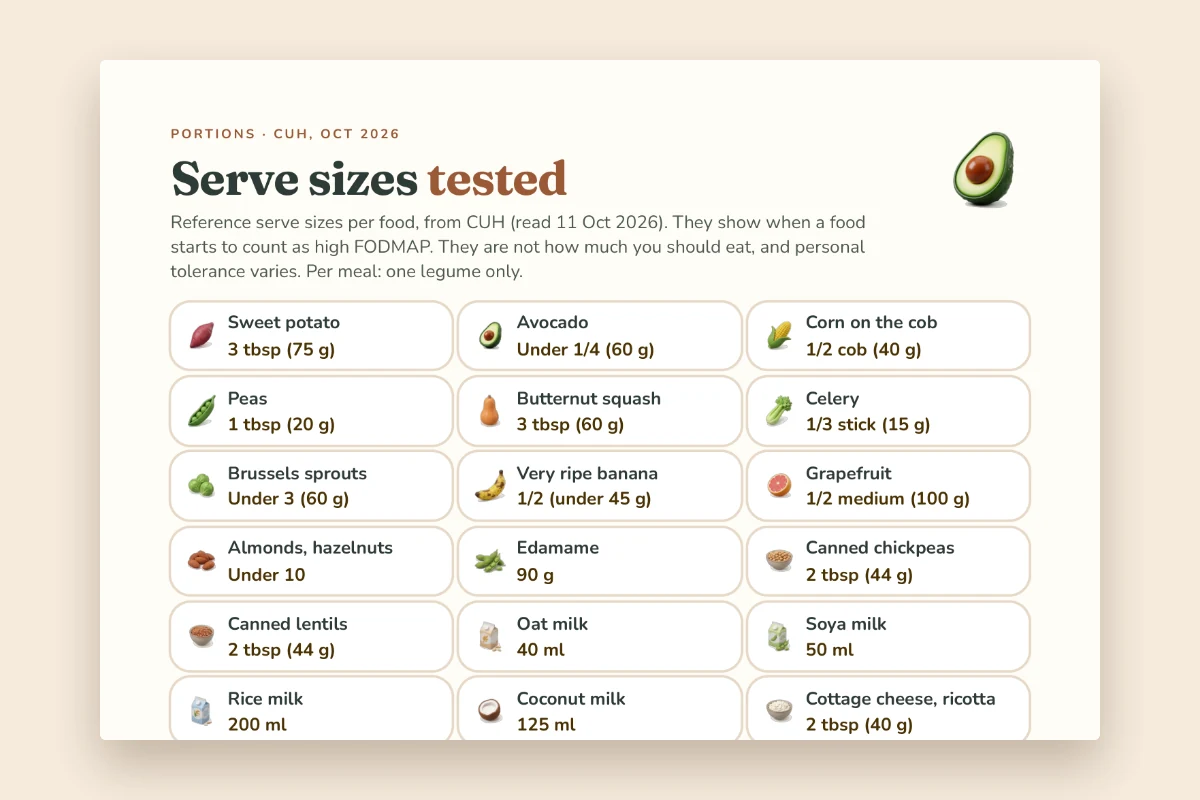
Monash publishes low FODMAP serve sizes in its FODMAP app, so apart from the 75 g vegetable serve (Monash, February 3, 2025) this chart gives none.
Serves can differ by source: in an r/FODMAPS thread from August 27, 2026, a poster reports that FODMAP Friendly gives a safe panko serving of 50 g while the Monash app shows 25 g as green and 102 g as yellow (the poster’s figures, not checked by us).
Print and tick
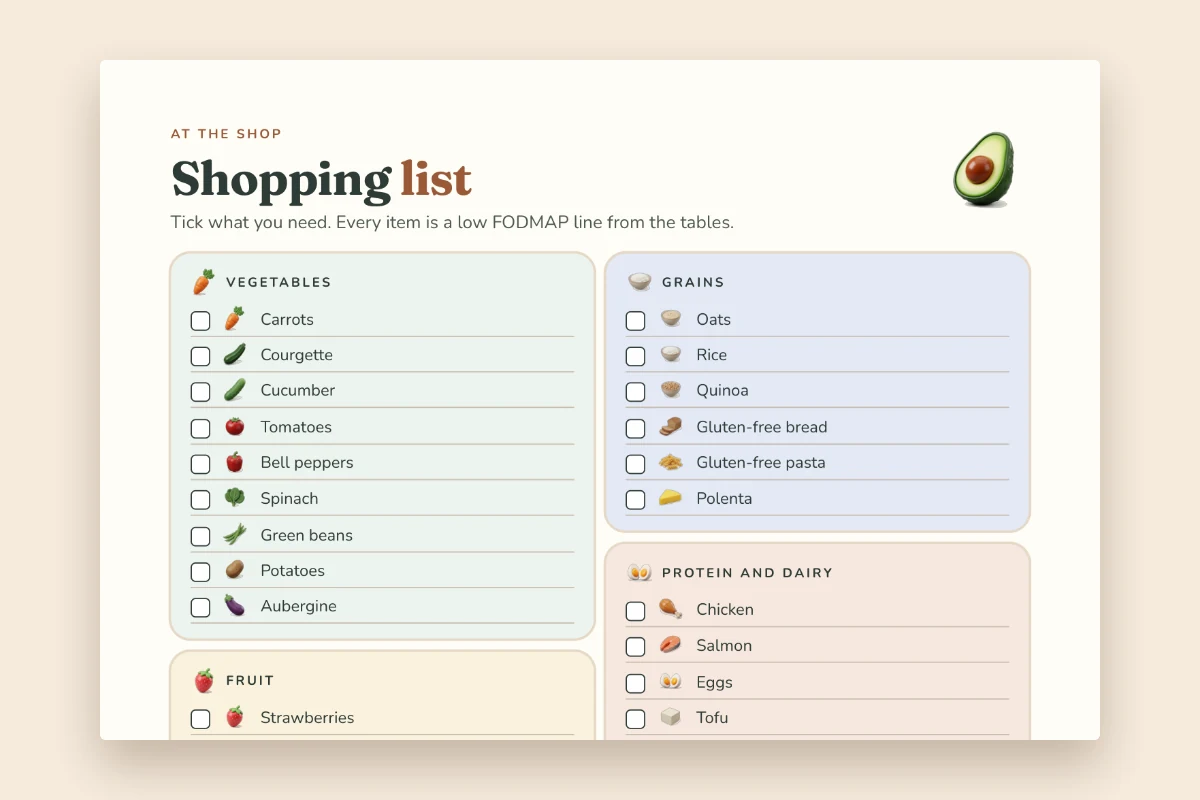
Print the low FODMAP grocery list and tick it off as you shop: US Letter PDF or A4 PDF. Check serve sizes in the Monash app before you buy.
Who’s behind Done Enough?
Done Enough is a small independent shop. These guides are written by The Done Enough Team, the site’s editorial team, which compiles published sources and has no doctors or dietitians. Each guide names its sources so you can check every line, and How we compile guides explains the method.
How we wrote this guide
Written from public sources, with no medical reviewer. Sources: the Monash shopping list (February 3, 2025), label reading page (September 3, 2021) and meal planning page (February 3, 2026) and the Canadian Digestive Health Foundation page (updated June 10, 2026), plus one Reddit thread, all read on October 11, 2026. The Monash shopping list and label reading pages are more than 12 months old. The four-step shop is ours. This guide is informational and is not medical advice.
Sources
- Monash University FODMAP Diet. “Low FODMAP shopping list”, by Chloe Valentine, Dietitian, February 3, 2025 (link). Read October 11, 2026. More than 12 months old.
- Monash University FODMAP Diet. “Label Reading and FODMAPs”, by Dakota Rhys-Jones and Lyndal Collins, Research Dietitians, September 3, 2021 (link). Read October 11, 2026. More than 12 months old.
- Monash University FODMAP Diet. “Planning Meals for the FODMAP Diet”, by Chloe Valentine, Dietitian, February 3, 2026 (link). Read October 11, 2026.
- Canadian Digestive Health Foundation. “Understanding the Low FODMAP Diet”, updated June 10, 2026 (link). Read October 11, 2026.
- Reddit, r/FODMAPS, thread posted August 27, 2026; date from the Reddit post timestamp checked on October 11, 2026. Personal account.
- Questions in the FAQ: Google US “People also ask” for the searches “low fodmap grocery list” and “low fodmap shopping list”, collected through DataForSEO on October 11, 2026. The answers are ours, from the sources above.
FAQ
What foods can I find at supermarkets that are low in FODMAP?
The Monash shopping list (February 3, 2025, more than 12 months old) names low FODMAP picks by aisle: vegetables such as carrot, cucumber, lettuce and potato, fruit such as firm banana, blueberry and orange, rice and quinoa, plain meat and fish, eggs, firm tofu, hard cheeses and lactose-free dairy. Serve size matters, and Monash points to its app for amounts.
What are some examples of low FODMAP foods?
The Monash shopping list (February 3, 2025, more than 12 months old) includes carrots, cucumber, lettuce, potatoes, spinach, firm bananas, blueberries, strawberries, oranges, rolled oats, rice, quinoa, eggs, firm tofu, hard cheeses and lactose-free dairy. The list is not exhaustive, and serve size matters.
What are top 10 worst high FODMAP foods?
We did not find an official top 10, and we do not publish one. Monash tests foods one by one and keeps the results in its FODMAP app, so use the app for the current high FODMAP foods and serve sizes.
Can I eat bread on a FODMAP diet?
The Monash shopping list (February 3, 2025) names gluten-free breads and sourdough as options. Gluten-free products can still contain high FODMAP ingredients such as soy or legume flours, so check the label and the Monash FODMAP app for serve sizes.
What are the symptoms of FODMAP intolerance?
FODMAPs are carbohydrates that some people with irritable bowel syndrome do not tolerate well. The Monash label guide (September 3, 2021, more than 12 months old) says prebiotic ingredients such as inulin can cause gas, bloating and distension in some people with IBS. Many conditions share these symptoms, so ask a doctor before changing your diet.
What can I eat out that's low FODMAP?
The Monash pages we used for this list give no restaurant list. They say (label guide, September 3, 2021) stock, sauces, dips, bars and health food products are among the foods where oligosaccharides (fructans and GOS) turn up, so check each item in the Monash app.