Food lists
Low FODMAP food list: high and low foods by group
Updated · Written by the Done Enough team · Sources linked below

In this guide (14 parts)
- What FODMAPs are, in plain words
- The list by group
- Which FODMAP is in which food
- Condiments, sauces and drinks
- Read the label: where FODMAPs hide
- Portions and ripeness change the answer
- Why the lists disagree, and how to check the date
- Hidden traps when you eat out or buy ready meals
- A week of low FODMAP meals, from Monash
- The three steps in brief
- Get the printable
- Who’s behind Done Enough?
- How we wrote this guide
- Sources
Free printable: get the PDF for this guide.
A low FODMAP food list sorts foods into high FODMAP foods that are swapped out and low FODMAP alternatives, where FODMAPs are fermentable carbohydrates that can trigger symptoms in some people with irritable bowel syndrome (IBS).
The tables below follow the sample list published by Monash University and add the FODMAP type for each group, so you can see why a food is on the list. It is informational only and does not replace advice from a doctor or dietitian.
Each table below names its Monash page and the date it was read; undated pages are flagged.
Our free Safe week planner turns the table below into a menu: tick foods and it builds a seven-day menu and a printable shopping list in your browser.
What FODMAPs are, in plain words
FODMAP stands for fermentable oligosaccharides, disaccharides, monosaccharides and polyols, according to Cleveland Clinic. These are carbohydrates that the small intestine does not absorb well.
They draw extra water into the gut and are then fermented by bacteria in the colon, which produces gas, Cleveland Clinic explains. For people with a sensitive gut, that can mean pain, bloating, distension and changes in bowel habit.
Cleveland Clinic says FODMAPs are not bad for everyone: the diet is meant for people with conditions such as IBS.
Cleveland Clinic names four classes (oligosaccharides, disaccharides, monosaccharides, polyols). The table below splits the oligosaccharides into fructans and GOS, as the Canadian Digestive Health Foundation does:
| Group | What it is |
|---|---|
| Fructans (a kind of oligosaccharide) | Short chains of carbohydrate molecules; fructans are one of the two oligosaccharide groups (CDHF) |
| GOS (the other oligosaccharide) | Galacto-oligosaccharides |
| Lactose | The sugar in milk |
| Excess fructose | More fructose than glucose |
| Polyols | Sugar alcohols such as sorbitol and mannitol |
Foods for each group are in “Which FODMAP is in which food” below.
Sources: Cleveland Clinic (last updated February 24, 2022) for the definition; Canadian Digestive Health Foundation (updated June 10, 2026) for fructans, GOS and excess fructose; Monash University, “High and low FODMAP foods” (undated, read October 11, 2026) for the foods.
The list by group
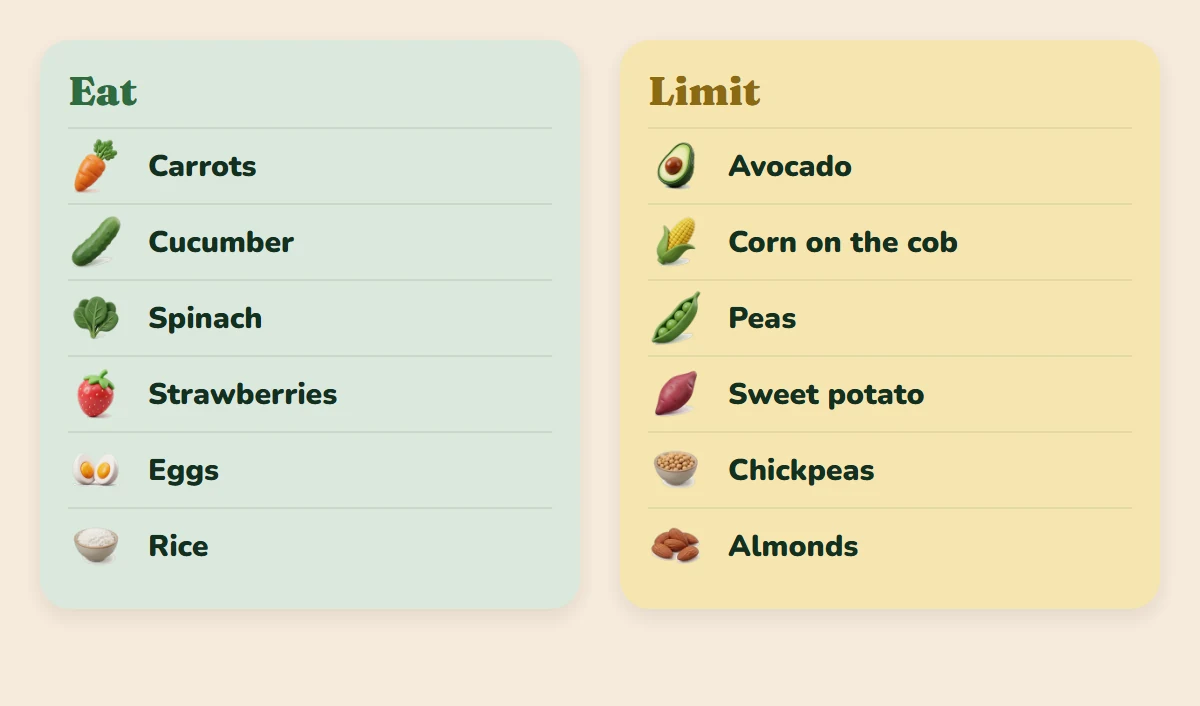
Each of the seven groups below pairs high FODMAP foods to swap out with low FODMAP alternatives from the Monash sample list. Amounts matter, and Monash says you “cannot simply guess which foods will be high or low in FODMAPs”.
| Group | High FODMAP (swap out) | Low FODMAP alternatives |
|---|---|---|
| Vegetables | Artichoke, asparagus, garlic, green peas, leek, mushrooms, onion, red bell pepper | Eggplant, green beans, bok choy, green bell pepper, carrot, cucumber, lettuce, potato |
| Fruit | Apples, cherries, dried fruit, mango, nectarines, peaches, pears, plums, watermelon | Cantaloupe, kiwifruit, mandarin, orange, pineapple, blueberries |
| Dairy and alternatives | Cow’s milk, custard, ice cream, yogurt, soy milk made from whole soybeans | Almond milk, brie and camembert, feta, hard cheeses, lactose-free milk, soy milk made from soy protein |
| Protein | Most legumes and pulses, some marinated or processed meats | Eggs, firm tofu, plain cooked meat, poultry and seafood, tempeh |
| Bread and cereals | Wheat, rye and barley breads, breakfast cereals, biscuits | Oats, quinoa flakes, quinoa pasta, rice pasta, corn pasta, plain rice cakes, sourdough spelt bread, wheat, rye and barley free breads |
| Sugars and sweeteners | High fructose corn syrup, honey, sugar free confectionery | Dark chocolate, maple syrup, rice malt syrup, table sugar |
| Nuts and seeds | Cashews, pistachios | Macadamias, peanuts, pumpkin seeds, walnuts |
Source for every row: Monash University, “High and low FODMAP foods” (page undated, read October 11, 2026). For the aisle version, checked against the Monash shopping list (February 3, 2025), see our low FODMAP grocery list.
Which FODMAP is in which food
Fruit mainly has excess fructose and sorbitol, vegetables fructans and mannitol, grains fructans, legumes GOS, dairy lactose, nuts GOS and fructans, and sweeteners fructose and polyols; meat, poultry and fish are naturally FODMAP-free (Monash, page undated, read October 11, 2026).
| Food group | Main FODMAP | Examples named by Monash |
|---|---|---|
| Fruit | Excess fructose, sorbitol | Apples, pears, mango, cherries, watermelon, peaches, plums |
| Vegetables | Fructans, mannitol | Garlic, onion, leek, artichoke (fructans); mushrooms, celery (mannitol) |
| Grains and cereals | Fructans, a little GOS | Wholemeal bread, rye bread, wheat pasta, muesli with wheat |
| Legumes and pulses | GOS | Red kidney beans, split peas, falafel, baked beans |
| Dairy | Lactose | Milk, yoghurt, soft cheeses (butter and cheese are examples of naturally low lactose dairy) |
| Meat, poultry, fish | None naturally | Marinated and processed meats can add garlic and onion |
| Nuts | GOS, fructans | Cashews and pistachios are high; macadamias and peanuts are low |
| Sugars and sweeteners | Fructose, polyols | Honey, high fructose corn syrup, sugar-free sweets |
Source: Monash University FODMAP Diet, “High and low FODMAP foods” (page undated), read October 11, 2026.
Condiments, sauces and drinks
Monash says some dips, condiments, sauces and marinades contain garlic and onion, and suggests asking for them separately or on the side if you are unsure.
- High FODMAP options named by Monash: garlic and onion based marinades and sauces, and vegetarian mince.
- Low FODMAP options named by Monash: barbecue sauce, mayonnaise, soy sauce, chutney and cranberry juice.
- Juice: Monash lists apple juice as high FODMAP on its sample list, and its label guide (September 3, 2021, more than 12 months old) names pear juice and fruit juice concentrates as sources of excess fructose.
- Plant milks: Monash says many are low FODMAP, for example soy milk made from soy protein, almond milk and rice milk. It adds that plant milks do not naturally contain calcium, so it suggests fortified ones with more than 120 mg of calcium per 100 ml.
Alcohol and coffee: the Canadian Digestive Health Foundation (updated June 10, 2026) lists 1 cup of drip coffee, 30 ml of espresso, a 375 ml can of beer and a 150 ml glass of white or sparkling wine as low FODMAP servings, and specialty espresso drinks made with cow’s milk or soy milk as high FODMAP.
It notes that alcohol “can be a gut irritant for some individuals” and that it is best to limit or avoid it, and that “caffeine can be a gut irritant for some individuals”. The Monash pages we read do not rate alcohol or coffee, so check the Monash app.
Read the label: where FODMAPs hide
Read ingredients in weight order and treat onion, garlic and purified FODMAPs (inulin, FOS, GOS) as a problem even in tiny amounts. Monash research dietitians published this label guide on September 3, 2021 (more than 12 months old, so check the app). The main points:
- Order of ingredients. Ingredients are listed by weight. Be careful if a high FODMAP food is near the top. If it is near the end of a long list, it may be fine.
- The exceptions. Onion and garlic, including in powder form, and purified FODMAPs such as inulin, FOS and GOS count even in tiny amounts, according to Monash.
- “Natural flavor”. Monash notes that the USDA says “natural flavor” or “flavors” on meat and poultry labels may include garlic powder, garlic juice, onion powder and onion juice. This is a US rule and we have no source for other countries.
- Polyols have numbers. On labels worldwide polyols can appear as E numbers. Monash lists sorbitol 420, mannitol 421, maltitol 965, isomalt 953, xylitol 967 and lactitol 966.
| FODMAP | Words to look for on a label |
|---|---|
| Excess fructose | Honey, high fructose corn syrup, glucose-fructose syrup, pear juice, apple juice, fruit juice concentrates |
| Fructans and GOS | Wheat, barley, rye, garlic or onion products, chickpea flour, soy flour, vegetable powder, inulin, FOS, GOS |
| Polyols | Sorbitol, mannitol, maltitol, xylitol, isomalt, lactitol |
| Lactose | Milk, yoghurt, cream, milk powders (only matters if you are lactose intolerant) |
Monash names three newer product types. Low sugar and no sugar products often use polyols in very high doses, so check their ingredients. Prebiotic products add inulin, chicory root, FOS or GOS, which can cause gas and bloating in some people with IBS. Protein powders are often high in FODMAPs. Monash warns that gluten-free products can contain soy or lupin flour.
Monash also suggests sticking to fresh food where possible, and looking for the Monash Low FODMAP Certified stamp, which means a product was lab tested and meets its criteria in the serving size on the pack.
Portions and ripeness change the answer
Portion size and ripeness can change whether a food counts as low or high FODMAP. Cleveland Clinic (page last updated February 24, 2022) gives an example: a ripe banana is high in fructose, but you can have up to a third in your cereal, or a whole one if it is not quite ripe. A dietitian can help with portions.
Monash says 75 g (2.65 oz) is a standard serve of the low FODMAP vegetables on its shopping list (page dated February 3, 2025). The Canadian Digestive Health Foundation (updated June 10, 2026) lists other serves, for example 1 cup of blueberries, 2 slices of sourdough bread, 15 walnut halves and 1 cup of lactose-free milk (CDHF mostly gives cup, slice and count measures, with a few weights and millilitres). Serves can differ by source and change over time, so check the Monash app for the current serve of each food. The Safe week planner leaves portions out.
Why the lists disagree, and how to check the date
Lists can differ because the FODMAP content of foods can change over time, according to the Canadian Digestive Health Foundation (updated June 10, 2026), so look for a date and treat the Monash app as the current reference.
In an r/FODMAPS thread from August 27, 2026, a poster reports that FODMAP Friendly gives a safe panko serving of 50 g while the Monash app shows 25 g as green and 102 g as yellow (the poster’s figures, not checked by us). The Monash page behind our table has no date, so we show the date we read it.
Hidden traps when you eat out or buy ready meals
Plain cooked meat or fish is easier to check than a sauced dish, because Monash says processed and marinated meats may contain garlic and onion. The Monash pages we read give no restaurant or ready-meal ratings, so check each item in the Monash app.
A week of low FODMAP meals, from Monash
Monash published a 7-day plan of named recipes on February 3, 2026, including a spinach, feta and pine nut omelette, a salmon and ricotta frittata and chicken cacciatore. The day-by-day table and the freezer-friendly groups are in our low FODMAP meal plan and in the Monash post.
The three steps in brief
Monash describes three steps: swap high FODMAP foods for low ones for 2 to 6 weeks, test one FODMAP group at a time, then build a personal long-term diet, with a dietitian trained in FODMAPs. Cleveland Clinic (February 24, 2022, more than 12 months old) puts the testing phase at about eight weeks on average. The full table and the pre-start checklist are in our low FODMAP diet for beginners.
Get the printable
Download the one-page grocery list, which groups items by store aisle with a tick box for each and a short “check before you buy” box, based on the Monash shopping list (February 3, 2025): US Letter or A4. The aisle version is explained in our low FODMAP grocery list.
Who’s behind Done Enough?
Done Enough is a small independent shop. These guides are written by The Done Enough Team, the site’s editorial team, which compiles published sources and has no doctors or dietitians. Each guide names its sources so you can check every line, and How we compile guides explains the method.
How we wrote this guide
Written from public sources by the Done Enough team, with no medical reviewer. Sources: Monash University, Cleveland Clinic (2022) and the Canadian Digestive Health Foundation (2026), plus one Reddit thread, all read on October 11, 2026. Caveat: most Monash pages are undated, so the timing figures in the three steps rest on few sources; only the Monash meal plan (February 3, 2026) and the CDHF page (updated June 10, 2026) are recent and dated, and the CDHF page gives only the roughly 2 to 6 weeks figure. This guide is informational and is not medical advice.
Sources
- Monash University FODMAP Diet. “High and low FODMAP foods” (link). Page undated. Read October 11, 2026.
- Monash University FODMAP Diet. “Starting the Low FODMAP Diet” (link). Page undated. Read October 11, 2026.
- Monash University FODMAP Diet blog. “Planning Meals for the FODMAP Diet”, Chloe Valentine, dietitian, February 3, 2026 (link). Read October 11, 2026.
- Monash University FODMAP Diet blog. “Label reading”, research dietitians, September 3, 2021 (link). Read October 11, 2026. More than 12 months old: used for label tips only.
- Monash University FODMAP Diet blog. “Low FODMAP shopping list”, Chloe Valentine, Dietitian, February 3, 2025 (link). Read October 11, 2026. More than 12 months old, check the app for current serves.
- Reddit, r/FODMAPS, thread posted August 27, 2026; date from the Reddit post timestamp checked on October 11, 2026. Personal account.
- Cleveland Clinic. “Low-FODMAP Diet”, medically reviewed, last updated February 24, 2022 (link). Read October 11, 2026. More than 12 months old.
- Canadian Digestive Health Foundation. “Understanding the Low FODMAP Diet”, updated June 10, 2026 (link). Read October 11, 2026.
- Questions in the FAQ: Google US “People also ask” for the searches “low fodmap food list”, “low fodmap diet for beginners” and “low fodmap shopping list”, collected through DataForSEO on October 11, 2026. The answers are ours, from the sources above.
FAQ
What are the top 10 low FODMAP foods?
We found no official top 10. Monash tests foods one by one and keeps the results in its app, and its website sample lists low FODMAP options by group, such as carrot, cucumber and potato for vegetables, oats, quinoa flakes and plain rice cakes for cereals, and eggs, firm tofu and plain cooked meat for protein. Serve size matters, so check the app.
What are the worst FODMAP foods to avoid?
We found no ranking from worst to best in the Monash pages we read. Its sample high FODMAP list includes garlic, onion, wheat, rye and barley breads, apples, pears, mango, cow's milk, yogurt, honey, cashews and pistachios, and most legumes and pulses. Amounts and processing change the result, so use the Monash app for current ratings.
What meals can you eat on a low FODMAP diet?
Monash published a 7-day plan on February 3, 2026, with examples such as a spinach, feta and pine nut omelette, oat and banana pancakes, a salmon and ricotta frittata and chicken cacciatore. It also lists freezer-friendly soups, curries, fritters and snack bars. Check each recipe in the app.
Can I eat bread on a FODMAP diet?
Monash lists wheat, rye and barley breads as high FODMAP, and sourdough spelt bread and wheat, rye and barley free breads as low FODMAP alternatives. Read the label, because gluten-free products can contain high FODMAP flours.
Can you explain the low FODMAP diet in a simple way?
FODMAPs are fermentable carbohydrates that can trigger symptoms in some people with irritable bowel syndrome. Monash describes three steps: swap high FODMAP foods for low ones for 2 to 6 weeks, test one FODMAP group at a time, then build a personal long-term diet. It says to follow it with a dietitian trained in FODMAPs.
How do I start a low FODMAP diet as a beginner?
Cleveland Clinic (February 24, 2022, more than 12 months old) suggests talking to a registered dietitian or GI specialist first, planning a time without big events, clearing high FODMAP foods from the fridge and pantry, and having a few easy standby meals ready. Monash says the first step lasts 2 to 6 weeks and that other therapies should be considered if symptoms do not improve.
What are the symptoms of FODMAP intolerance?
Cleveland Clinic (February 24, 2022, more than 12 months old) says FODMAPs can cause pain, bloating, distension and changes in bowel habit in people with a sensitive gut. Monash says the diet is intended for people with medically diagnosed IBS, and the Canadian Digestive Health Foundation (updated June 10, 2026) says to consult your physician if you have symptoms commonly associated with IBS.
What do I eat in a day low FODMAP?
Monash's 7-day plan has examples such as a spinach, feta and pine nut omelette for breakfast, a salmon and ricotta frittata for lunch on day 2, and rice cakes with peanut butter or popcorn as snacks. For a full simple week, see our low FODMAP meal plan. Only the 75 g vegetable serve (Monash, February 3, 2025) and a few CDHF serves (June 10, 2026) are sourced on this page, so check the app for other serves.