Kids routines
Printable chore chart for teens that doesn't look babyish
Updated · Done Enough
In this guide (10 parts)
- Normal chores for teens
- Chore list for teens, by room
- Example: a filled-in weekly chart for a 15-year-old
- Alternative: a deadline list instead of fixed days
- Sample loads at 13, 15 and 17
- Setting it up with your teen
- Chores and money for teens
- Teens with ADHD: making the chart easier to use
- Common problems
- Printing tips
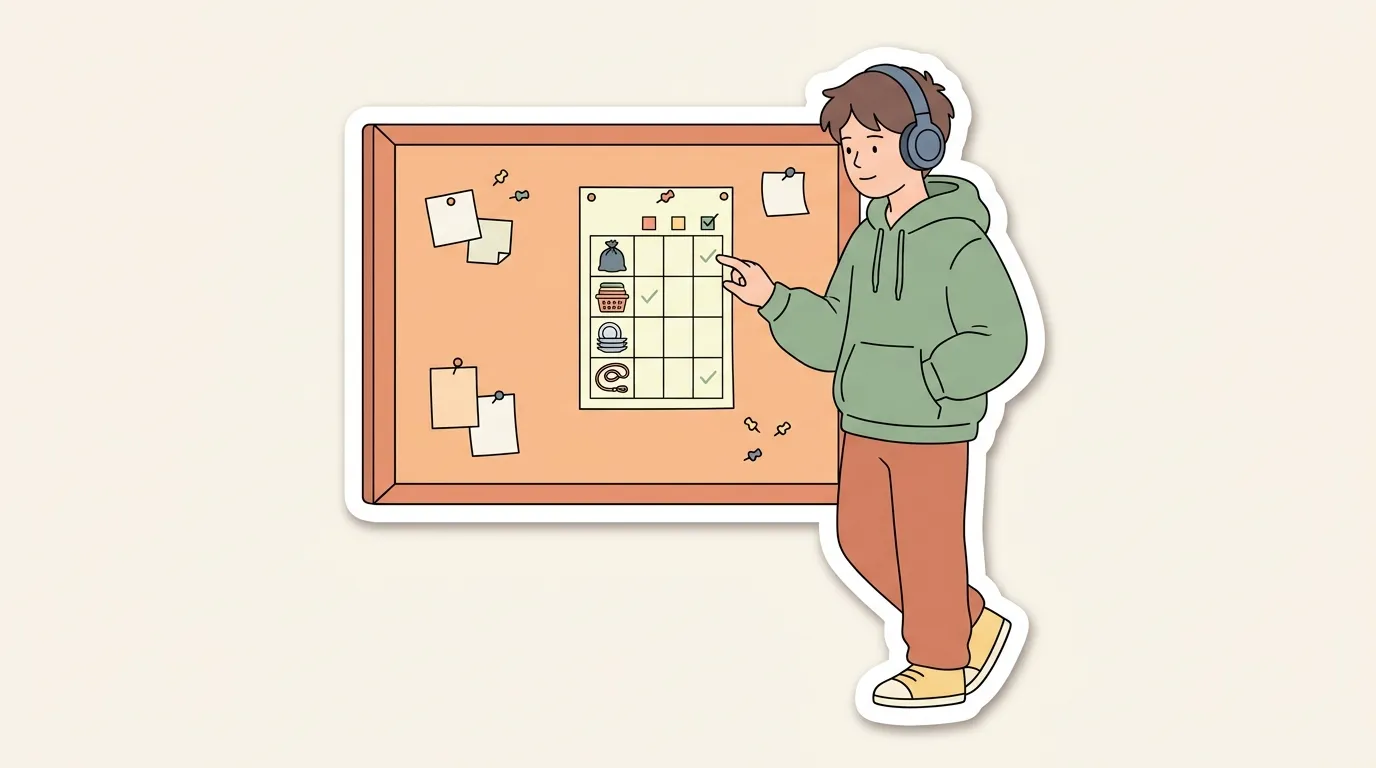
A chore chart for teens is a plain weekly list of their jobs, with a set day for each bigger task and a box to tick. Skip stickers and cartoons. Teens tend to follow a chart they helped write, laid out like an adult planner.
It is part of our kids routines guide. For younger kids, start with the main chore chart guide.
Normal chores for teens
| Age | Chore ideas |
|---|---|
| 13 to 14 | Own laundry, dishwasher, own room, trash and recycling, simple meals |
| 15 to 16 | Clean a bathroom, cook a full meal once a week, yard work, help a younger sibling |
| 17+ | Grocery list and shopping, small repairs, plan the week’s meals |
Chore list for teens, by room
| Room | Jobs teens can own |
|---|---|
| Kitchen | Unload dishwasher, wipe counters, cook one dinner, take out trash |
| Bathroom | Wipe sink and mirror, clean toilet, replace towels |
| Bedroom | Tidy, change sheets, put away laundry |
| Laundry | Wash, dry, fold and put away their own clothes |
| Outside | Mow, rake, shovel snow, wash the car |
| Errands (if they drive) | Grocery run, pick up a sibling, drop off recycling |
Pick 4 to 6 from the table, not all of them. One daily job plus a few weekly ones is plenty during the school year.
Example: a filled-in weekly chart for a 15-year-old
| Job | Mon | Tue | Wed | Thu | Fri | Sat | Sun |
|---|---|---|---|---|---|---|---|
| Unload dishwasher | ☐ | ☐ | ☐ | ☐ | ☐ | ☐ | ☐ |
| Tidy own room | ☐ | ☐ | |||||
| Laundry, start to finish | ☐ | ||||||
| Cook dinner | ☐ | ||||||
| Bathroom sink and mirror | ☐ | ||||||
| Rotating job (trash, yard, car) | ☐ |
Only one job is daily. The rest sits on one or two days, so it fits around school and activities.
Alternative: a deadline list instead of fixed days
Many teens push back on “Saturday at 10”. A deadline list keeps the standard and lets them choose the time.
| Job | Done by | Done? |
|---|---|---|
| Own laundry, folded and put away | Sunday 6 pm | ☐ |
| Bathroom sink, mirror, toilet | Saturday night | ☐ |
| Cook one dinner (they pick the day) | Friday | ☐ |
| Lawn or snow | Sunday | ☐ |
| Dishwasher | Each morning before school | ☐ |
A monthly version with week columns is in the chore chart template guide.
Sample loads at 13, 15 and 17
Starting points for a school year. Adjust around homework, sports and part-time jobs.
| Age | Daily | Weekly | Monthly or rotating |
|---|---|---|---|
| 13 | Unload dishwasher | Own laundry, tidy room | Take out recycling |
| 15 | Dishes after dinner | Laundry, bathroom sink, cook one dinner | Yard or car |
| 17 | Own dishes | Laundry, full bathroom, one dinner with grocery list | Small repairs, sibling pickup |
The step up from 13 to 17 is less about more jobs and more about owning whole jobs: planning, doing and finishing without a reminder. That is the skill they will need when they live on their own.
Setting it up with your teen
- List every job the house needs, not only theirs. Teens notice a one-sided list.
- Let them choose some of their jobs and the day they do them.
- Write down what “done” means. “Laundry done” means folded and put away.
- Give a deadline, not a time. “By Sunday 6 pm” suits most teens better than “Saturday 10 am”.
- Agree what happens if it’s not done, before it happens, and keep it calm and predictable.
- Review after one week and change what did not work.
Chores and money for teens
Families handle this in different ways. Three common setups:
| Setup | How it works | Watch out |
|---|---|---|
| Fixed allowance, chores expected | Money for budgeting; chores are part of family life | Needs a clear “what if it’s not done” rule |
| Paid per job | Each job has a price | Unpaid help can become “what do I get?” |
| Base chores free, extras paid | Daily jobs expected, bigger jobs (car, yard) paid | Agree prices in advance |
Write your rule at the bottom of the chart so it isn’t renegotiated every week.
Teens with ADHD: making the chart easier to use
Teens with ADHD often know what needs doing and still lose track of it. A few changes can help without making the chart feel childish (home tips, not medical advice):
- Short steps for big jobs. “Clean bathroom” becomes “sink, mirror, toilet, towels” with four small boxes.
- Visual cues where the job happens. A small checklist taped inside the bathroom cabinet or on the laundry machine. Plain icons work; for younger siblings, the kids visual routine cards cover morning and bedtime steps.
- Phone reminders tied to deadlines, set by the teen, not by you.
- Immediate payoff. A job done means the agreed privilege right away, not at the end of the month.
- Fewer jobs, done well. Three reliable jobs beat six half-done ones.
More ideas for younger kids are in ADHD routine for kids.
Common problems
| Problem | Try this |
|---|---|
| “I forgot” | Hang the chart where they pass every day, or put a photo of it on their phone |
| Jobs done badly | Show the standard once more and write it on the chart |
| Siblings argue about fairness | Rotate unpopular jobs weekly, or let them spin the task wheel |
| The chart stops after two weeks | Change the jobs or the layout. Novelty wearing off is normal |
| Busy weeks (exams, games) | Agree a lighter “exam week” version ahead of time |
| Endless negotiation | Fix the deal for a month, then review |
Printing tips
- Plain design: one font, no cartoons, black and white is fine.
- One page, landscape, big enough to read from the doorway.
- A sheet protector and a dry-erase marker so it lasts the month.
- A phone photo of the chart, so they can check it away from home.
Sit down with your teen this week, list the jobs together, and print the first version. Want a blank grid to copy? Use the chore chart template. For younger siblings, see chore chart ideas by age.
FAQ
What are normal chores for a 14-year-old?
Typical jobs at 14 include doing their own laundry, loading and unloading the dishwasher, cleaning their room, taking out trash and recycling, and helping cook a simple meal. What counts as normal depends on your family and their schedule.
How to create a chore chart for teens?
Sit down with them, list the jobs the house needs, and let them pick some of theirs. Put the list in a plain weekly grid with a day for each bigger job, and agree on what done means. Review it together after a week.
What chores should a 16 year old be doing?
Many 16-year-olds can handle most household jobs: laundry start to finish, cleaning a bathroom, cooking a full meal, yard work, and grocery runs if they drive. Fit the load around school, work and activities.
What are some good chore charts for teenagers?
Plain layouts work best: a weekly grid with one daily job and a few weekly ones, a list with deadlines instead of fixed days, or a shared family rotation. Skip cartoons and stickers, and let them keep a photo of it on their phone.
What is the most disliked chore?
It varies by household, which is why rotating the jobs nobody wants works better than handing them to one person. A shared rotation feels fairer to teens than a fixed list.